
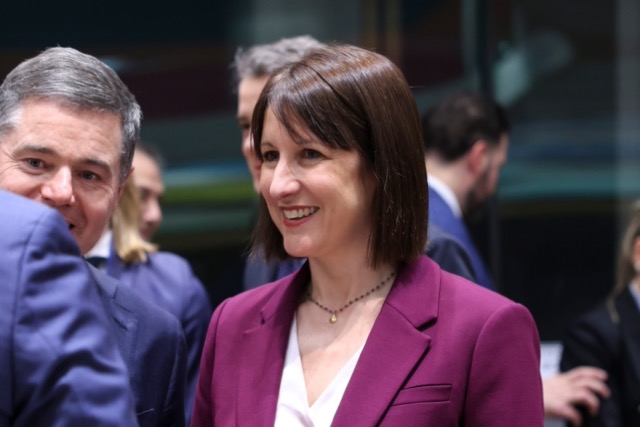
Economic growth will slow in 2026 compared to 2025 before picking up in 2027 and 2028, Chancellor Rachel Reeves said in her Spring Statement today in the Commons.
The Chancellor said that while GDP growth would be lower in 2026 the outlook for the UK economy was better.
She said inflation was falling, unemployment should peak later this year and interest rates had been cut six times since the last election, a move that would help business.
The OBR says, however, that economic growth is subdued.
The Office for Budget Responsibility 'Economic and Fiscal Outlook', published today to coincide with the Chancellor’s statement, said: “In the central forecast, real GDP growth is expected to slow from 1.4 per cent in 2025 to 1.1 per cent in 2026.
“The latter is 0.3 percentage points lower than in November, reflecting weaker-than-expected GDP outturns in late 2025, further evidence of a loosening labour market, and subdued business surveys.”
The Chancellor said despite the figures the UK was showing the fastest growth of any European G7 member and per capita GDP growth was improving.
She said UK GDP growth would be 1.1% in 2026, followed by 1.6% in 2027 and 2028 and 1.5% in 2028 and 2029.
She said the Government had the “right economic plan for Britain.” She also pointed out the UK was doing well against an uncertain economic backdrop globally which had not been helped by the latest Middle East conflict.
In a relatively short speech of about 30 minutes the Chancellor did not announce any major fiscal initiatives, as widely expected. The Spring Statement was described by experts as a, “no news is good news Statement.”
Anna Macdonald, investment manager at Aubrey Capital Management, said: “My view is that Reeves was hoping to deliver a 'nothing to see here' kind of statement, as she has promised to hold just one fiscal event per year now, which will be the Budget.
“Strong tax revenues and sufficient headroom from the November Budget, have meant that borrowing costs had been trending down recently, but given the escalation in the Middle East, yields are ticking up. Energy prices could impact inflation in the coming weeks and months which will limit the opportunities for further rate cuts, which would boost the UK economy.
“Unfortunately, we import a lot of gas, so this will weigh on the outlook. If only we had more production from North Sea fields which would at least be bringing in tax revenues!”
Andrew Zanelli, head of technical engagement at Aberdeen Adviser, said: “It’s a case of no news is good news today. Advisers and their clients will breathe a sigh of relief that the much anticipated ‘boring Budget’ turned out to be just that as they continue to work through what last year’s Autumn Budget means for them.
"With pensions being brought into the IHT scope from April 2027 against a backdrop of an IHT nil rate band frozen since 2009, rising property values and IHT receipts, we’re hearing in our meetings with advisers they are getting significant numbers of new client enquiries, especially on IHT planning as many people begin to realise they’ll be impacted.”
James Tothill, investment specialist at Wesleyan Assurance Society, said: "The government's commitment to one fiscal event per year brings helpful predictability, creating an opportunity for advisers to prepare clients for the changes ahead.
"April 2026 will see tax on dividends in increase, while in April 2027 the Cash ISA limit drops to £12,000 and the tax rate on savings increases. Combined with pensions entering the inheritance tax net in 2027, we're looking at a landscape where tax-efficient planning becomes even more valuable for clients.
Faye Church, senior planning director at Rathbones, says: “Spring Statements are built on the known knowns and the known unknowns. The difficulty is that geopolitics has a habit of turning yesterday’s unknowns into today’s shocks - and the escalating situation in Iran has already raised serious questions about whether the new forecasts were out of date almost as soon as they landed.
“The Statement itself was intentionally unexciting. In volatile times, predictability is a policy tool in its own right. The aim was not to surprise markets, but to anchor expectations - even if events since then have already complicated the picture. As expected, the set piece did not deliver sweeping tax changes or major spending commitments.
“Notably, the Chancellor offered only silence on pensions, with no policy changes or updates unveiled - a reprieve of sorts after the scale of uncertainty surrounding the pensions regime in the run up to last year’s Budget.”
Financial Planning Today Analysis: The Chancellor has stuck to her guns today in producing a Spring Statement without any major policy changes or announcements. Much of the speech came over as an attack on political rivals, instead. The situation in Iran is obviously a potential economic risk and was probably too recent for the Chancellor to take much of it into account. From an economic point of view economic growth is bumping along the ground with little chance of significant growth over the next few years. Despite this disappointing backdrop, the Chancellor says people's living standards are improving and most people should be better off by £1,000 by the end of this Parliament. With most people facing higher tax bills and everyday bills such as Council Tax rising well above inflation it's hard to see where this improvement will come from as more of people's income is swallowed by taxes.
• Editor's note: In the first draft of this story the comment by James Tothill stated that the Cash ISA limit would drop to £12,000 from April. This should have made clear the change happens in April 2027. This has now been corrected. Apologies for the error.