
The Great Wealth Transfer of trillions of dollars among high-net-worth (HNW) families is happening, according to a new study.
More than three quarters (77%) of financial, wealth and legal practitioners say they have seen evidence of it in the past 12 months.
The figures have been published in the 2026 Barometer report on global trends in family wealth and succession planning from STEP, the professional body for trust and estate practitioners.
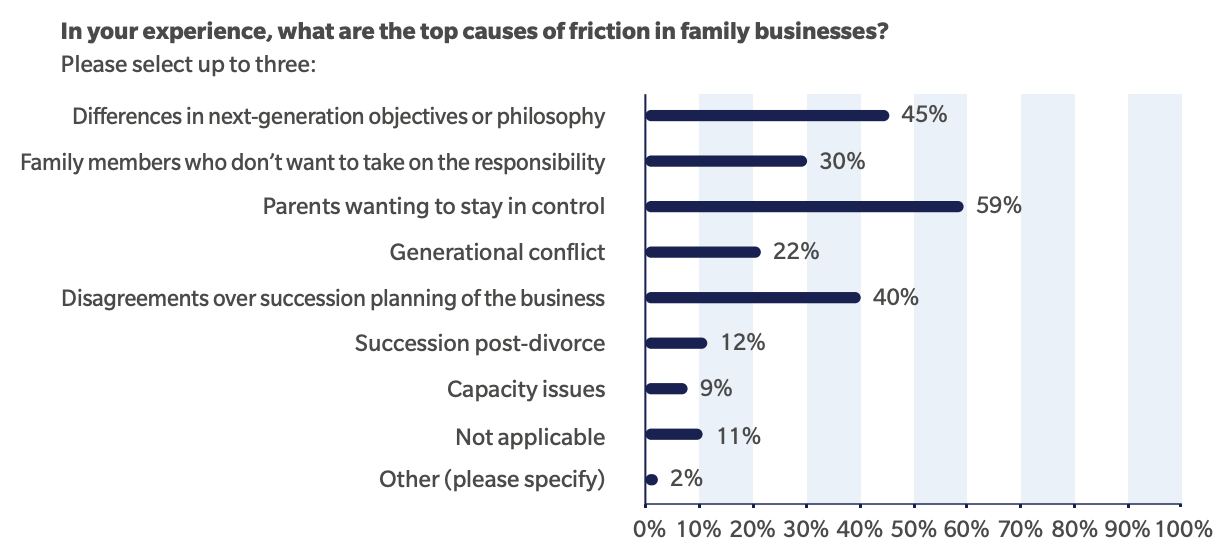
It said succession planning is being hampered by conflicts within blended families, concerns about future care, and the older generations’ lack of confidence in younger people’s ability to handle inheritance wisely or to run the family business successfully.
The report says blended families are the leading cause of legal or planning challenges to business succession or inheritance, according to 71% of practitioners, with 41% seeing an increase in disputes within blended families in the past 12 months.
Source: STEP Barometer 2026
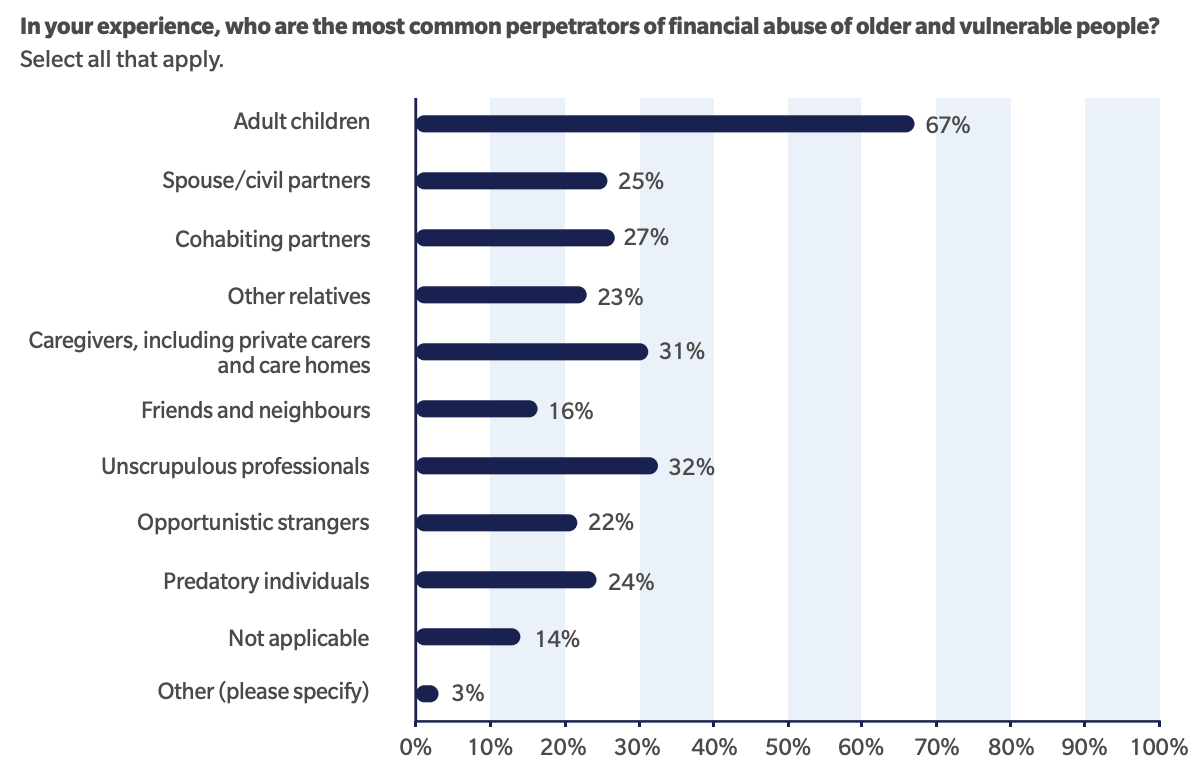
A growing ageing population, rising dementia rates and incidence of cognitive decline, and loss of capacity is impacting professional practice worldwide, the report says. While 74% of practitioners surveyed are confident they can spot the signs of financial abuse, 44% report that they have seen instances of actual or suspected vulnerable person financial abuse.
The report says that adult children are the most common perpetrators of this abuse, according to 67% of practitioners, although some highlight that this abuse can sometimes be unintentional.
The findings emphasise the urgent need for better safeguarding and greater public awareness.
Source: STEP Barometer 2026
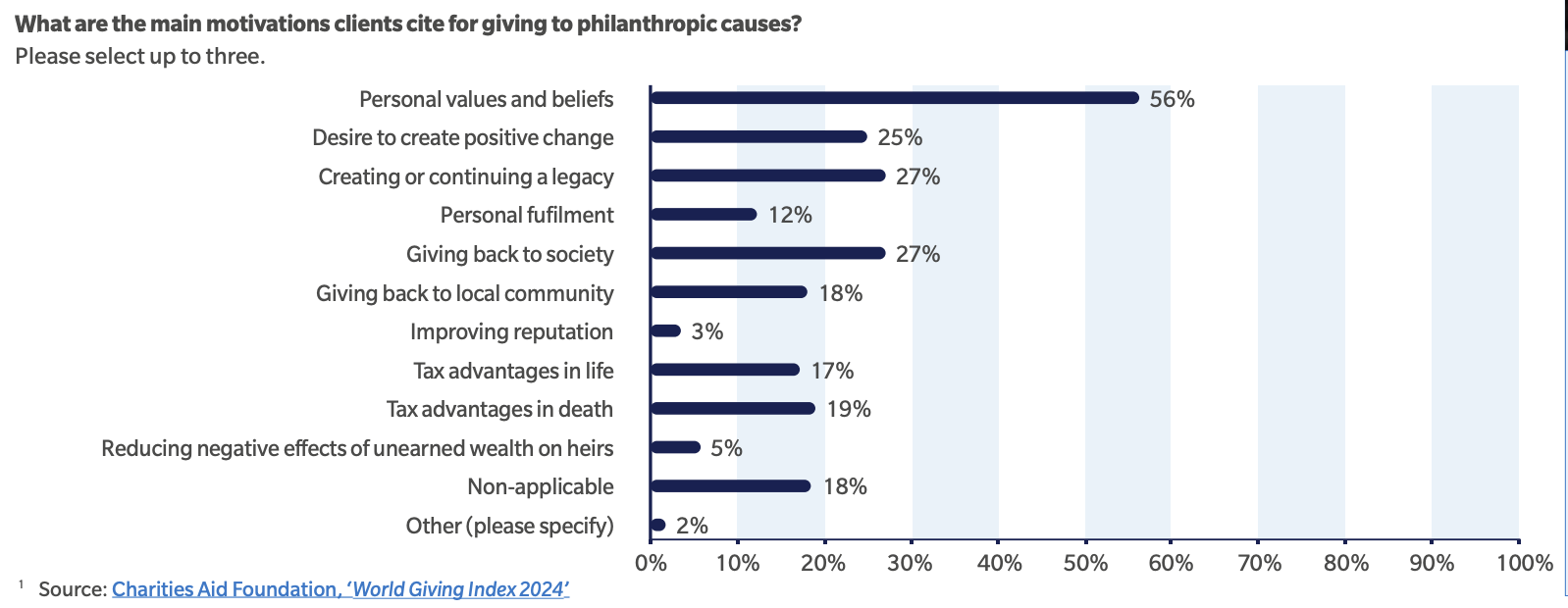
The personal values and beliefs of clients are now the primary motivator for philanthropic giving, according to more than half of practitioners surveyed (56%) – far outstripping tax advantages in life (17%) or death (19%).
These changing attitudes to wealth are influenced by new types of clients seeking advice, including more internationally mobile clients, women leading family wealth decisions, and younger high-net-worth individuals.
As clients become more open to conversations about responsible wealth stewardship, and motivations for wealth planning move beyond tax mitigation and asset protection,
more than a third of practitioners (36%) agree they have changed how they frame discussions about wealth and purpose.
Source: STEP Barometer 2026
When asked about their main source of professional satisfaction, 32% of practitioners selected human connection with clients. While 60% of practitioners feel confident they can use AI responsibly without undermining ethical standards or client trust, most feel strongly that AI can never replace human interaction.
The impact of AI is also biting, with 15% of practitioners saying they have seen wills with errors drafted by AI. Practitioners also say they are increasingly having to correct client misunderstandings arising from AI-generated advice.
Trust and estate planning practice is increasingly dominated by compliance, according to the report. The majority of practitioners surveyed (85%) said they are seeing an increased regulatory and compliance burden on their practice in the past three years.
High-net-worth families are also becoming more internationally mobile – with 60% of practitioners saying they are seeing more internationally mobile clients. The rise in multi-jurisdictional families creates significant wealth planning challenges, according to 63% of practitioners. More than half (51%) of practitioners have observed an increase in wealthy families, including business owners, relocating abroad for tax reasons.
Emma Lovell, CEO of STEP, said: ‘The Barometer points to a sector stepping up to meet the shifting demands of increasingly complex and internationally mobile families at a time when trusted expert advice, guidance and open communication within families is needed now more than ever.
“It highlights how the role of practitioners is adapting to meet these changing demands – from offering traditional legal and tax advice towards providing more holistic, values-driven coaching and guidance, helping clients navigate key milestones throughout their lives.”
• The global practitioner research was conducted by STEP during 17 November-10 December 2025, with members and practitioners, including those in legal, tax and accounting, fiduciary, family office and family business advisory. A total of 533 respondents took part and number of STEP ‘TEP’ members were also interviewed during January 2026. Independent research was commissioned with Censuswide to survey the views of over 6,000 adults across the UK, Singapore and Australia. This research took place 12 December 2025 to 2 January 2026.